


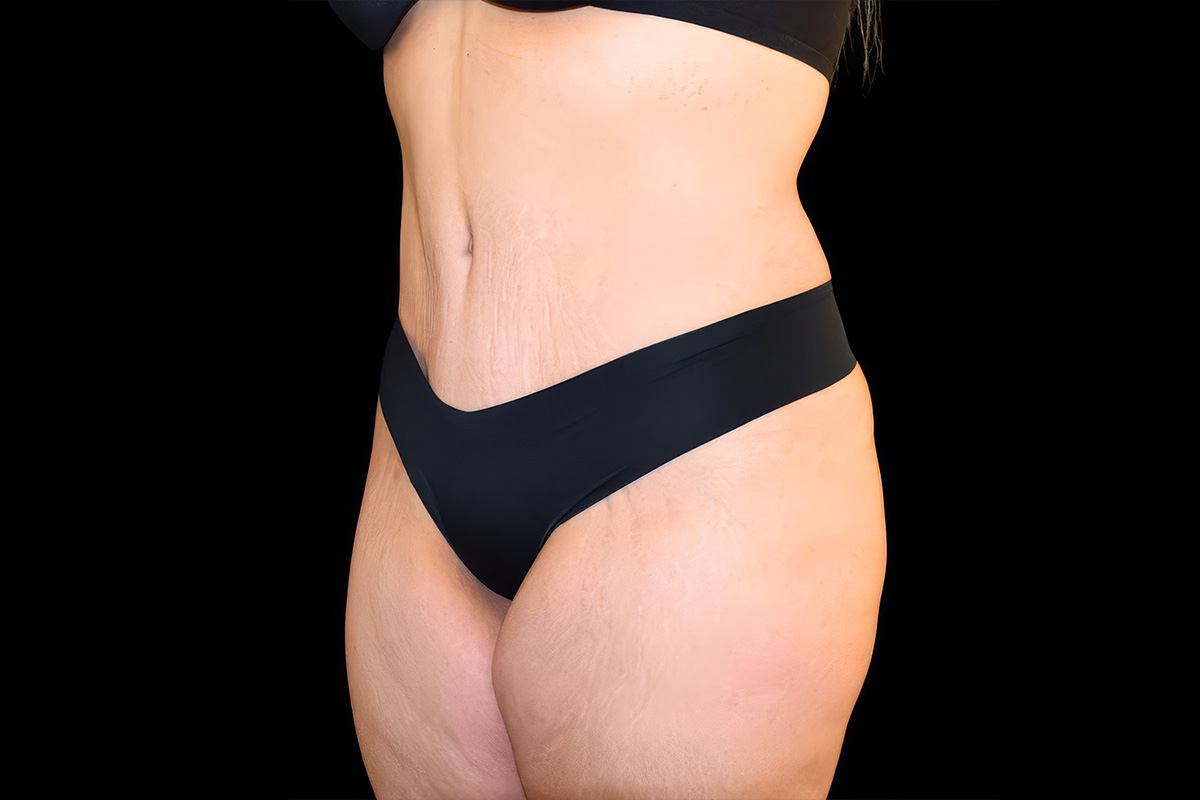

Patients today have two distinct surgical pathways to breast augmentation: implants, the established standard used for decades, and fat transfer, a growing option that appeals to patients seeking enhancement using their own tissue. Both are legitimate, clinically proven procedures. But they serve different goals, suit different candidates, and produce meaningfully different outcomes in terms of size, shape, feel, and recovery. The right choice is not about which procedure is better in the abstract. It is about which one fits your body, your goals, and your expectations. This guide provides an honest, side-by-side comparison to help you understand where each option excels, where its limitations lie, and how to think about the decision before your consultation.
Contents
- 1 What is Fat Transfer Breast Augmentation?
- 2 What is implant-based Breast Augmentation?
- 3 The complete comparison: fat transfer vs. implants
- 4 Size increase: the most important difference for most patients
- 5 Who is a good candidate for fat transfer?
- 6 Who is a good candidate for implants?
- 7 Recovery: how the two procedures compare
- 8 Longevity: will results last?
- 9 Scarring: the incision comparison
- 10 Cost: what patients should know
- 11 A note on the “natural” framing
- 12 FAQ
- 12.1 Is Fat Transfer Breast Augmentation permanent?
- 12.2 How much bigger can fat transfer make your breasts?
- 12.3 Does fat transfer feel more natural than implants?
- 12.4 Can I combine fat transfer with breast implants?
- 12.5 How much donor fat do I need for Fat Transfer Breast Augmentation?
- 12.6 Is fat transfer or implants better for athletes?
- 12.7 Which is more expensive: fat transfer or breast implants?
- 12.8 How long is Fat Transfer Breast Augmentation recovery?
- 12.9 What if I want more size than fat transfer can provide?
- 12.10 Is fat transfer to the breast FDA-approved?
- 13 Which option is right for you? schedule a consultation in Newport Beach
- 14 Sources
What is Fat Transfer Breast Augmentation?
Fat transfer breast augmentation uses the patient’s own body fat to add volume to the breasts. The process begins with liposuction to harvest fat from donor areas such as the abdomen, flanks, or thighs. That fat is then processed and purified before being re-injected into the breast tissue in small, carefully placed amounts. Because this method uses the patient’s own tissue rather than a foreign device, there is no implant material involved.
Volume increase from fat transfer is modest by nature, typically in the range of half a cup to one full cup size. The procedure appeals to patients who want subtle, natural-looking enhancement rather than dramatic size change. For a comprehensive look at how the procedure works, candidacy, and expected outcomes, see our complete guide to fat transfer breast augmentation.
What is implant-based Breast Augmentation?
Breast augmentation with implants involves placing a silicone gel or saline device either beneath or over the pectoral muscle to add volume and reshape the breast. Implants are available in a wide range of sizes, profiles, and shapes, giving surgeons and patients significant control over the outcome. Volume increase can range from modest to dramatic, from one cup size to three or more, depending on the patient’s anatomy and goals. For additional detail on implant types and options, see our silicone breast implants guide.
Implant-based augmentation is the most commonly performed cosmetic surgical procedure in the United States and has a decades-long safety and outcomes record.
The complete comparison: fat transfer vs. implants
The two procedures differ across nearly every dimension a patient might consider. The table below captures the most important distinctions at a glance.
Side-by-side comparison table
| Factor | Fat Transfer | Breast Implants |
| Volume increase | Modest (half to 1 cup size typical) | Significant (1 to 3+ cup sizes) |
| Material | Patient’s own fat (autologous) | Silicone gel or saline (medical device) |
| Feel/texture | Very natural (own tissue) | Natural to firm depending on type/placement |
| Longevity | 60 to 80% fat survival; results permanent after settling | Device lifespan 10 to 20+ years; may need replacement |
| Scarring | Minimal (small liposuction punctures only) | Small incisions at breast fold, areola, or armpit |
| Recovery | Typically somewhat faster; soreness at donor sites too | 4 to 6 weeks for full activity clearance |
| Candidacy requirement | Must have adequate donor fat | No donor fat requirement |
| Shape control | Limited: follows natural tissue distribution | High: profile, shape, and size customizable |
| Revision/touch-up | Possible with additional transfer | Implant exchange possible |
| Foreign material | None | Yes (silicone or saline device) |
| Risk of capsular contracture | None | Small risk (varies by placement technique) |
| Body contouring benefit | Yes: slims donor areas simultaneously | No: procedure is breast-specific |
Size increase: the most important difference for most patients
How much can fat transfer increase breast size?
Fat transfer produces a modest size increase by design. Most patients achieve approximately half a cup to one full cup size. Some patients achieve slightly more with multiple sessions, but this remains a fundamentally different scale of change from what implants can offer. Patients who want one or more full cup sizes of increase, or who want precise control over the final size and projection, are generally not well-suited for fat transfer as a standalone procedure.
Setting realistic expectations on this point before consultation is one of the most important things a patient can do. The number one source of dissatisfaction with fat transfer is underestimating how modest the change will be.
Why fat transfer size increase is variable
Not all transferred fat cells survive. Only cells that successfully establish a blood supply after injection remain viable long-term. Most studies report a survival rate in the range of 60 to 80% of the transferred volume. Surgeons account for this by overfilling at the time of injection. Volume continues to settle over a period of three to six months, after which the surviving fat is generally stable and permanent. The variability in fat survival means the final result cannot be predicted with the same precision as implant sizing.
Can fat transfer and implants be combined?
Yes. Some patients use fat transfer alongside implants to refine specific areas, including improving upper pole fullness, softening implant edges that are visible through the skin, or correcting mild asymmetry between the two sides. This combination approach suits patients who want the predictable size and shape of implants with the added soft tissue coverage that fat grafting can provide. See our breast augmentation page for general implant information, and discuss this option with your surgeon at consultation if it applies to your goals.
Who is a good candidate for fat transfer?
Ideal fat transfer candidates
Fat transfer tends to be the right fit for patients who want a subtle, natural-looking enhancement rather than a dramatic size change; have adequate donor fat in the abdomen, flanks, or thighs; prefer to avoid any foreign implant material in the body; would benefit from liposuction of donor areas simultaneously; are close to their goal size and want a refinement rather than a significant increase; or place the highest priority on a result that feels entirely like their own tissue.
Who is not a good candidate for fat transfer
Patients who want more than one cup size of increase will consistently be better served by implants. Very lean patients with minimal donor fat available may not have enough tissue to harvest for meaningful breast volume. Patients who want highly predictable shape and projection control, or who want a dramatic transformation, are not well-suited for fat transfer as the primary augmentation method.
Who is a good candidate for implants?
Ideal Implant candidates
Implants are typically the stronger option for patients who want one or more cup sizes of increase; have minimal natural breast tissue and want meaningful volume; want precise control over the final size, shape, and projection; are lean with limited donor fat; or want the most predictable and significant result available from a single procedure.
Implants after weight loss or pregnancy
Patients who have experienced significant breast volume loss after pregnancy, breastfeeding, or substantial weight loss often benefit more from implants than from fat transfer. Fat transfer cannot restore the breast shape and volume that is lost when breast tissue deflates or descends after these changes. In many cases, a breast lift with augmentation is the most appropriate approach, combining implant volume with a lift to address both the loss of fullness and the change in breast position simultaneously.
Recovery: how the two procedures compare
Fat transfer recovery
Fat transfer recovery is typically somewhat faster than implant recovery, particularly because it does not involve placing an implant beneath the pectoral muscle. However, patients manage soreness and temporary contour changes at both the breast and the donor sites where liposuction was performed. Compression garments are worn at the donor sites during the early healing phase. Most patients return to light activity within one to two weeks, with full activity clearance typically around four to six weeks.
Implant recovery
Implant recovery, especially for submuscular placement, involves more significant chest soreness in the early weeks due to the pectoral muscle involvement. Most patients are largely recovered and back to normal daily activities within four to six weeks. Final results take three to six months to fully develop as implants settle into their final position and swelling resolves completely.
Longevity: will results last?
How long fat transfer results last
After the initial fat settling period of three to six months, the surviving fat cells are generally permanent. Fat transfer does not involve a device that can rupture, degrade, or require scheduled replacement. However, significant weight fluctuations can affect breast volume: weight loss may reduce the transferred fat along with other fat stores in the body, while weight gain can increase it. Maintaining a stable weight supports the longevity of fat transfer results.
How long implant results last
Implants are not lifetime devices but are designed for long-term use. Most implants last ten to twenty years or more without issue. The FDA does not recommend routine replacement on a fixed schedule; replacement is indicated when rupture, capsular contracture, or patient preference warrants it. For a full breakdown of what to expect at each milestone, see our guide on how long breast implants last.
Scarring: the incision comparison
Scarring after fat transfer
Liposuction requires only small puncture incisions at the donor sites, typically three to four millimeters, which heal to nearly invisible marks in most patients. Breast injections are similarly small. There are no breast incisions of the length required in implant surgery.
Scarring after implant surgery
Implant surgery requires an incision of approximately three to five centimeters, most commonly placed in the inframammary fold, the periareolar border, or the axilla. With skilled surgical technique and appropriate scar care, incisions typically fade significantly over twelve to eighteen months and are positioned to minimize visible impact in daily life and most clothing.
Cost: what patients should know
Fat transfer breast augmentation is often priced higher than straightforward implant augmentation because it involves two simultaneous procedures: liposuction and fat injection. However, implants may generate additional costs over time through revision or replacement surgery. Neither option eliminates long-term cost entirely, and total lifetime value should factor into the comparison alongside upfront cost.
For a full breakdown of what drives breast augmentation pricing in California, see our guide on breast augmentation costs in California. Financing options are available through Roham Plastic Surgery to help with planning.
These figures are general market ranges provided for budgeting context only and do not reflect Dr. Roham’s pricing. Your specific quote is determined at consultation.
A note on the “natural” framing
Many patients research fat transfer specifically because they want a “natural” option, and that instinct is reasonable. Fat transfer is autologous, meaning it uses your own tissue, and avoids any foreign device entirely. For the right candidate, those are genuine advantages.
At the same time, it would be misleading to frame implants as “unnatural.” Silicone gel implants have a decades-long safety and outcomes record, and implant-based augmentation produces natural-looking results for the large majority of well-chosen candidates. The distinction is not between a natural procedure and an unnatural one. It is between two different surgical approaches, each genuinely appropriate for different patients and goals.
FAQ
Is Fat Transfer Breast Augmentation permanent?
After the initial settling period of three to six months, surviving fat cells are permanent. Results can fluctuate with significant weight changes, but the fat that survives does not require replacement or monitoring in the way an implant device does.
How much bigger can fat transfer make your breasts?
Most patients achieve approximately half a cup to one full cup size increase with fat transfer. Patients who want more than one cup size of increase are typically better served by implants.
Does fat transfer feel more natural than implants?
Fat transfer uses your own tissue, so the result feels like natural breast tissue. Modern silicone gel implants also feel very natural, particularly in patients with adequate tissue coverage. Both can produce natural-feeling results, but fat transfer has the edge for patients with minimal existing breast tissue.
Can I combine fat transfer with breast implants?
Yes. Fat transfer can be used alongside implants to improve upper pole fullness, correct asymmetry, or soften implant edges. This combination approach is appropriate for some patients and worth discussing at consultation.
How much donor fat do I need for Fat Transfer Breast Augmentation?
Patients need sufficient fat in areas such as the abdomen, flanks, or thighs to harvest adequate volume after accounting for processing and expected survival rates. Very lean patients, generally those with a BMI below approximately 20 to 22, may not have enough donor fat to achieve meaningful results. Your surgeon will assess this during consultation.
Is fat transfer or implants better for athletes?
Both can work well for athletic patients. Implants offer more predictable size and shape outcomes. Fat transfer avoids any foreign material. Athletes should discuss their training routine with their surgeon to determine the most appropriate placement and recovery plan.
Which is more expensive: fat transfer or breast implants?
Fat transfer is often priced higher because it includes liposuction as a component of the procedure. However, implants may incur additional costs over time. Always obtain a personalized quote at consultation. The pricing disclaimer above applies to all cost discussions.
How long is Fat Transfer Breast Augmentation recovery?
Most patients return to light activity within one to two weeks. Donor sites may remain sore for two to four weeks. Full activity clearance is typically around four to six weeks.
What if I want more size than fat transfer can provide?
Implants are the appropriate choice for patients who want more than one cup size of increase. Some patients start with fat transfer and later opt for implants, or discuss combining both approaches in a single procedure at consultation.
Is fat transfer to the breast FDA-approved?
Fat transfer uses the patient’s own tissue and does not involve an implant device, so there is no FDA approval requirement for the material itself. The procedure is an established reconstructive and cosmetic technique performed by trained surgeons. The cannulas and processing equipment used are FDA-cleared medical devices.
Which option is right for you? schedule a consultation in Newport Beach
Neither fat transfer nor implants is universally the better option. The right choice depends entirely on your anatomy, your goals, and what you expect from the procedure. Patients seeking subtle, natural enhancement with simultaneous body contouring from a single surgical event may find fat transfer to be a compelling fit. Patients who want meaningful, predictable size increase with precise control over shape and projection are typically better served by implants.
Dr. Ali Roham performs both procedures at his Newport Beach practice and will help you identify the right path based on a hands-on assessment of your anatomy and an honest conversation about your goals. To review real patient results before booking, visit the breast augmentation before-and-after gallery. To schedule your consultation, contact the office online or call (949) 269-6960.
Sources
- American Society of Plastic Surgeons, Fat grafting guidelines and breast augmentation statistics: plasticsurgery.org
- FDA, Breast implant safety and longevity data: fda.gov
- Plastic and Reconstructive Surgery Journal, Clinical research on fat graft survival rates and long-term outcomes: journals.lww.com/prsjournal
- Aesthetic Surgery Journal, Comparative outcomes data for implant vs. fat transfer patients: asj.oxfordjournals.org
- NIH/PubMed, Peer-reviewed research on fat graft viability and clinical outcomes: pubmed.ncbi.nlm.nih.gov