
What are Silicone Breast Implants? Introduction, Benefits, and Photos for 2025
Content
Silicone breast implants remain the most requested option in breast augmentation today, and that popularity has only grown heading into 2025. More patients are choosing them for their natural look, long-term durability, and the wide range of sizes and shapes now available. Whether you're exploring breast augmentation for the first time or considering a revision, understanding what silicone implants are, how they work, and what they involve is an important first step. This guide covers everything from implant types and benefits to surgical steps, recovery, and costs, so you can approach your consultation with confidence.
What Are Silicone Breast Implants?
Silicone breast implants are medical-grade devices consisting of a silicone outer shell filled with a cohesive silicone gel. Unlike saline implants, which are filled with sterile saltwater after insertion, silicone implants come pre-filled, meaning they arrive in a fixed shape and volume. The gel inside is designed to closely mimic the consistency of natural breast tissue, which is why so many patients find the result feels more realistic.
The shells themselves can be either smooth or textured, and the implants are available in round or anatomical (teardrop) shapes. Silicone gel has been used in implants for decades, and today's formulations are significantly more advanced than earlier generations. Modern implants use highly cohesive gel that holds together even if the outer shell is compromised, which reduces the concern around gel migration. According to the FDA's guidance on silicone gel-filled breast implants, these devices are approved for breast augmentation in patients aged 22 and older, and for reconstruction at any age.
Why Choose Silicone Breast Implants?
Patients choose silicone implants for a variety of reasons, but the most consistent ones are feel and aesthetics. The gel closely resembles natural breast tissue in both texture and movement, which makes the results look and feel less artificial than older implant designs. They're also less prone to visible rippling, particularly in patients with thinner tissue coverage.
Beyond appearance, silicone implants tend to have strong long-term performance. Many patients go years without needing revision surgery, and the range of available sizes and profiles makes customization relatively straightforward. For patients who want results that hold up over time while looking natural, silicone is frequently the most practical option.
Are Silicone Breast Implants Safe?
Safety concerns around silicone implants were more prominent in earlier decades, when older cohesion technology raised questions about what would happen in the event of a rupture. Today's implants are quite different. Current FDA-approved silicone implants undergo rigorous testing, and the highly cohesive gel is designed to stay in place rather than migrate into surrounding tissue. The FDA recommends that patients with silicone implants receive periodic MRI or ultrasound screenings to check for silent rupture, which can occur without obvious symptoms. A board-certified surgeon will review your individual health profile and walk you through the specific risks that apply to your situation before any decisions are made.
Recent Stats and Trends Around Silicone Breast Implants
Breast augmentation has consistently ranked among the top surgical cosmetic procedures in the United States. According to the American Society of Plastic Surgeons' annual statistics report, hundreds of thousands of augmentation procedures are performed each year, with silicone implants accounting for a significant share of those cases. In recent years, there has been a notable shift toward more moderate, natural-looking results, with patients selecting smaller profiles and anatomical shapes more often than in previous decades. Awareness around BIA-ALCL (breast implant-associated anaplastic large cell lymphoma) has also shaped conversations between patients and surgeons, with textured implants falling out of favor and smooth implants now representing the clear majority of placements.
The Different Types of Silicone Implants
Not all silicone implants are the same. Understanding the distinctions between subtypes can help you have a more productive conversation with your surgeon about what might suit your body and goals.
Traditional Silicone Implants
Standard silicone gel implants use a softer, more fluid gel that moves naturally with the body. These are the most commonly used implants in breast augmentation and tend to produce results that closely resemble natural breast tissue in feel and motion.
Form-Stable (Highly Cohesive) Implants
Form-stable implants use a firmer, more densely cross-linked gel that holds its shape regardless of position or orientation. These implants maintain their profile even if the shell develops a breach. They are frequently used in anatomical (teardrop) designs and may be preferred for patients seeking a more defined contour.
Smooth Silicone Implants
Smooth implants have a slick outer shell that allows them to move freely within the implant pocket. This freedom of movement contributes to a more natural look and feel, particularly when standing or bending. They are the predominant choice in the current market.
Textured Silicone Implants
Textured implants have a roughened surface that adheres to surrounding tissue, originally intended to reduce rotation and capsular contracture risk. However, research linking certain textured devices to BIA-ALCL has led to significantly reduced usage. Your surgeon can help you understand whether any specific textured device is appropriate given your anatomy and goals.
Benefits of Silicone Breast Implants
Silicone implants offer a range of practical advantages that make them the preferred choice for many patients considering augmentation.
Natural Look and Feel
The cohesive gel inside silicone implants closely mimics the texture and movement of natural breast tissue. Patients with thinner body frames particularly benefit from this, since there is less natural tissue coverage to disguise any implant irregularities.
Durability and Long Lifespan
Silicone implants are designed to last many years, and many patients do not require revision surgery for a decade or more. While no implant is considered permanent, their durability makes them a cost-effective choice over time.
Reduced Risk of Rippling
Compared to saline implants, silicone gel has a lower tendency to wrinkle or ripple through the skin. This matters most for patients with limited natural breast tissue, where rippling would be more visible.
Versatility in Shapes and Sizes
Silicone implants are available in a wide range of profiles, projection levels, and volumes measured in cubic centimeters (cc). This flexibility allows surgeons to tailor the implant selection to each patient's body frame and aesthetic goals, rather than fitting everyone into a limited set of options.
Stability in Shape Over Time
Unlike older gel formulations, today's highly cohesive silicone maintains its shape with normal physical activity, aging, and changes in body weight.
Disadvantages of Silicone Gel Implants
A balanced decision requires understanding the drawbacks alongside the benefits.
Higher Cost Compared to Saline Implants
Silicone implants cost more to manufacture, and the overall surgical fee tends to be higher than it would be for saline. The added expense reflects material quality and, in some cases, slightly more complex surgical logistics given that the implants are pre-filled.
Risk of Silent Rupture
When a saline implant ruptures, deflation is obvious fairly quickly. Silicone implants can rupture without any visible change in appearance or noticeable symptoms, a situation referred to as a silent rupture. This is why the FDA recommends periodic imaging screenings for patients with silicone devices.
Longer Incisions During Surgery
Because silicone implants are pre-filled, they require a larger incision than saline implants, which can be filled after insertion. Most incisions are placed in discreet locations, but patients concerned about visible scarring should discuss incision placement options with their surgeon in advance.
Cost in California for Silicone Breast Implants
In California, and particularly in the Orange County and Newport Beach area, silicone breast augmentation typically ranges from approximately $9,000 to $15,000 or more, depending on the surgeon's experience, facility fees, anesthesia, and the specific implants selected. These figures are general estimates for educational purposes only. Actual pricing varies and will be discussed during your consultation.
Average Cost for Silicone Breast Implants
Nationally, the average cost of silicone breast augmentation falls between $7,000 and $13,000 when all fees are included. The total typically encompasses the surgeon's fee, anesthesia, operating room costs, and post-operative care. Geographic location, surgeon expertise, implant brand, and the complexity of your procedure all influence the final figure. Insurance rarely covers elective cosmetic augmentation, though financing options may be available to help make the procedure more accessible. For an accurate quote, an in-person consultation is the best starting point.
Common Sizes of Silicone Breast Implants
Implant volume is measured in cubic centimeters (cc), and the range of available sizes is broad enough to accommodate nearly any body type or aesthetic goal. Most patients select implants somewhere within the following ranges: 200cc to 300cc for subtle, natural-looking enhancement; 300cc to 400cc for a more noticeable but proportionate result; 400cc to 500cc for fuller, higher-profile outcomes; 500cc to 600cc for patients seeking significant volume; and 600cc and above for cases where maximum projection is the goal. The right size depends on your existing breast tissue, chest wall dimensions, skin elasticity, and the look you want to achieve. Your surgeon will help guide this decision using measurements and sizers during your consultation.
The Procedure for Silicone Breast Implants
Understanding each stage of the process helps reduce pre-surgical anxiety and sets realistic expectations for how things will unfold.
Step 1: Consultation
Your first appointment is an opportunity to discuss your goals, review your medical history, and explore implant options with Dr. Roham. Come prepared with questions and any reference images that represent the outcome you have in mind.
Step 2: Pre-Operative Assessment
Before surgery, you will complete any necessary lab work, imaging, or medication adjustments. These steps are designed to confirm that you are medically ready for the procedure and that your recovery will be as smooth as possible.
Step 3: Anesthesia
Breast augmentation is performed under general anesthesia, ensuring you are comfortable throughout. As with any anesthetic, there are associated risks your surgeon will review with you beforehand.
Step 4: Making the Incision
Common incision locations include the inframammary fold (beneath the breast), the periareolar border (around the nipple), or the axillary region (underarm). Each has advantages and tradeoffs related to scarring, access, and long-term outcomes. Your surgeon will recommend the most appropriate option based on your anatomy.
Step 5: Insertion of Implant
The implant is placed either behind the breast tissue (subglandular) or beneath the pectoral muscle (submuscular). Submuscular placement tends to produce more natural-looking results in patients with limited tissue coverage and is generally associated with a lower risk of capsular contracture.
Step 6: Closing the Incisions
Incisions are closed with layered sutures, skin adhesive, or surgical tape. Careful closure technique plays an important role in minimizing visible scarring over time.
Step 7: Recovery
Most patients are able to return home the same day. The initial recovery period involves managing soreness and swelling, and patients are typically advised to avoid strenuous activity for several weeks. A more detailed breakdown follows in the next section.
Recovery Process
The first few days after surgery typically involve moderate soreness, swelling, and some tightness across the chest. Most patients are mobile within 24 to 48 hours, though lifting and overhead reaching should be avoided for at least the first two weeks. Returning to light desk work is often possible within a week, while more physical activity should wait four to six weeks depending on your progress. Post-operative appointments allow Dr. Roham to monitor healing and assess how the implants are settling into position. Final results are usually visible within three to six months, once swelling has fully resolved.
Potential Risks and Complications
Like any surgical procedure, breast augmentation carries inherent risks. Common concerns include infection, changes in nipple or breast sensation, capsular contracture (hardening of the scar tissue around the implant), and implant rupture. Less common complications include asymmetry, implant malposition, and seroma. BIA-ALCL, while rare, has been associated with certain textured implants and warrants a candid discussion during your consultation. Your surgeon will review all applicable risks, explain how they are managed, and discuss what steps are taken to reduce their likelihood. Individual results vary and no procedure is without risk.
Maintenance and Lifespan of Silicone Breast Implants
Silicone implants are durable, but they are not considered lifetime devices. Most patients can expect their implants to remain intact and functional for ten to twenty years, though some will last longer without issue. Regular follow-up appointments and periodic imaging as recommended by the FDA help ensure that any problems are identified early. If a rupture or other complication does occur, revision surgery is typically straightforward for a qualified surgeon.
Before and After Photos
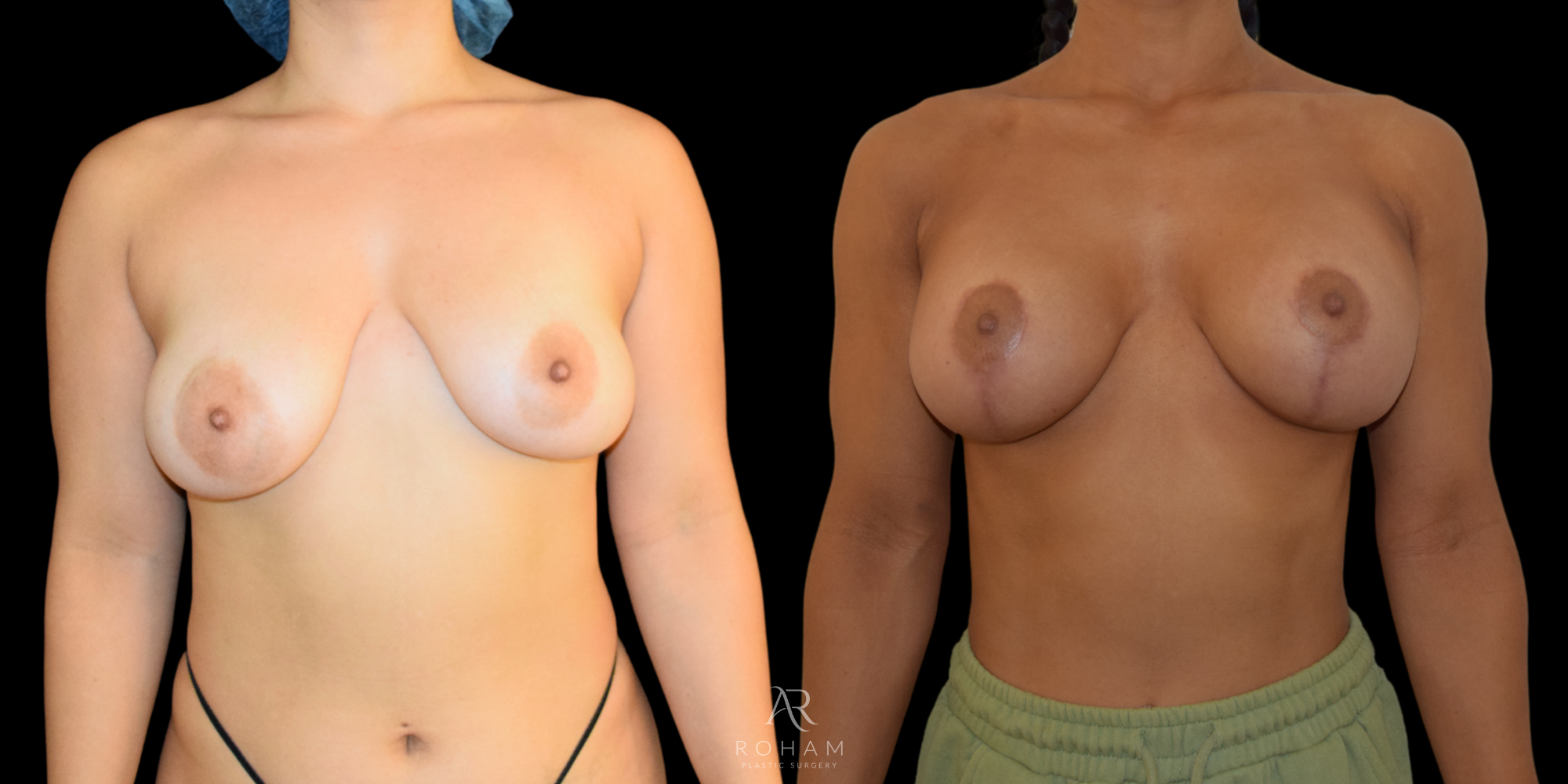
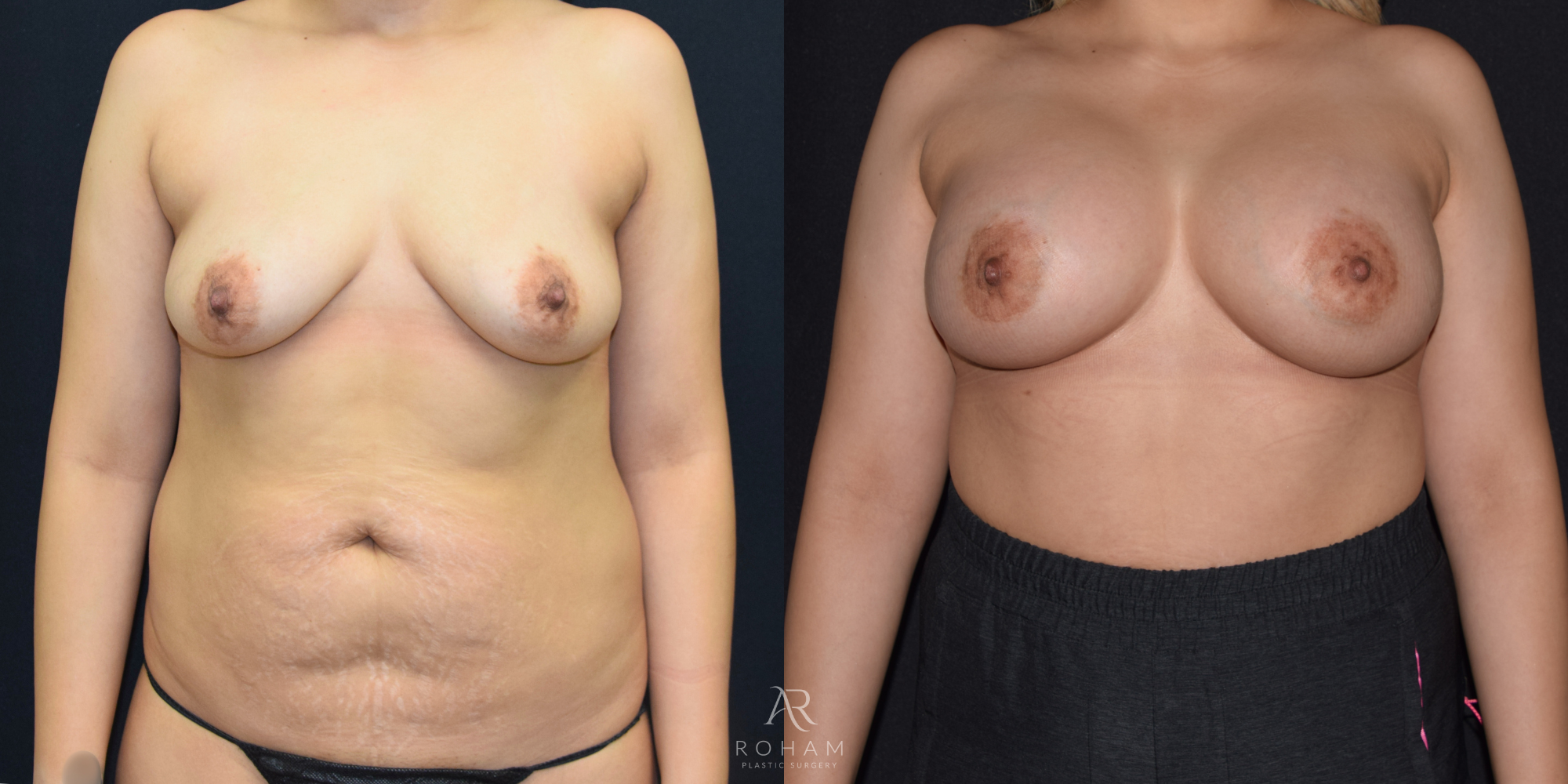
Viewing real patient results is one of the most useful parts of the research process. Dr. Roham's before and after gallery features a range of body types and aesthetic outcomes so you can get a realistic sense of what is achievable.
How to Choose a Doctor for Your Silicone Breast Implant Procedure
Choosing the right surgeon is one of the most important decisions in this process. Look for someone with documented surgical training in breast procedures, a portfolio of real patient results, and a consultation approach that makes you feel heard and informed rather than rushed. Dr. Ali Roham is certified by the American Osteopathic Board of Surgery in the plastic surgery discipline and has extensive experience with breast augmentation procedures in Newport Beach and throughout Orange County. To schedule a consultation, call (949) 269-7990 or contact us online.
Results vary from patient to patient. This content is for educational purposes only and does not constitute medical advice. Pricing information reflects general averages and does not represent actual fees, which may vary based on individual circumstances and may include additional costs. Please schedule a consultation with Dr. Roham to discuss your specific situation.