



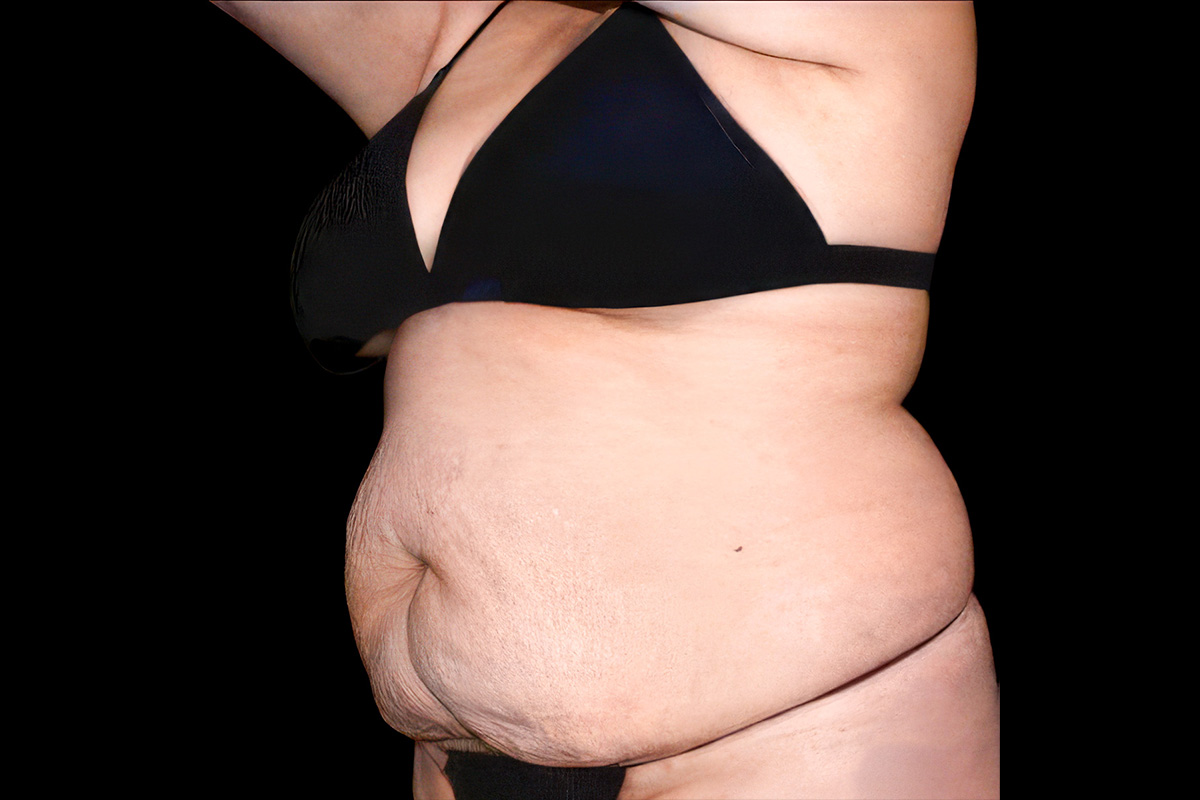
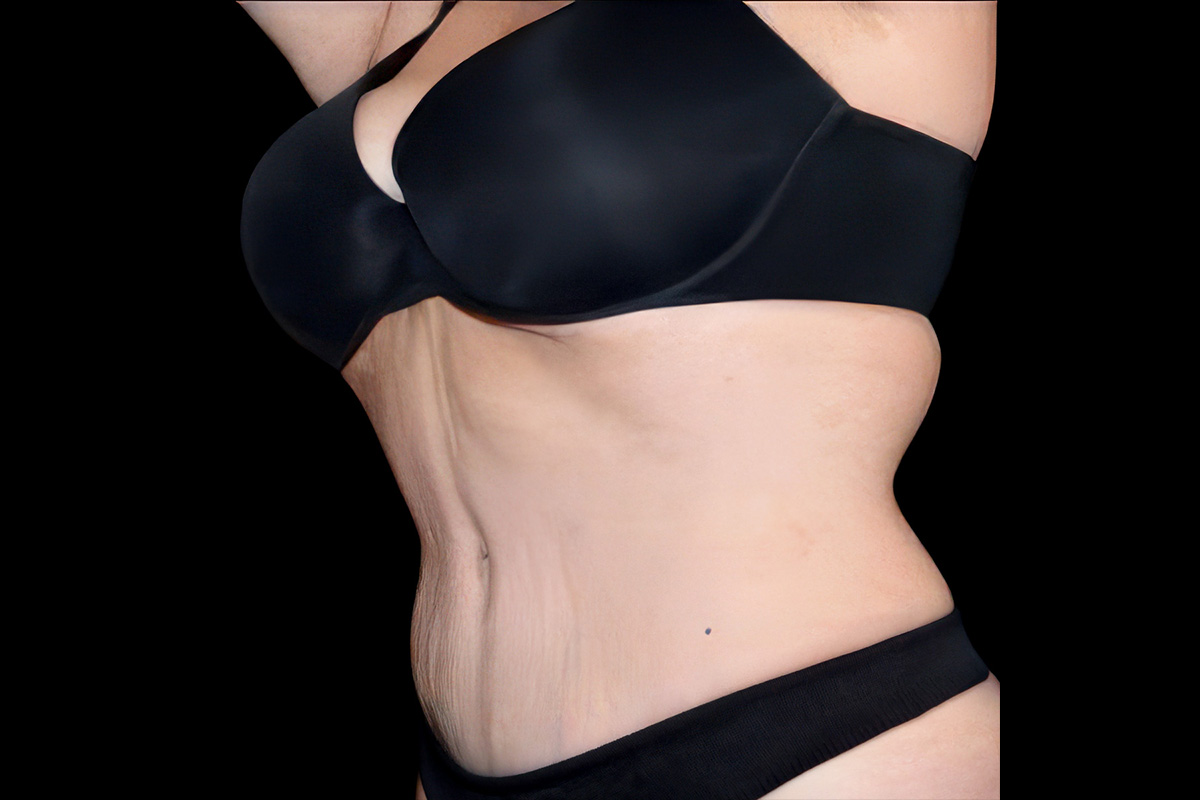
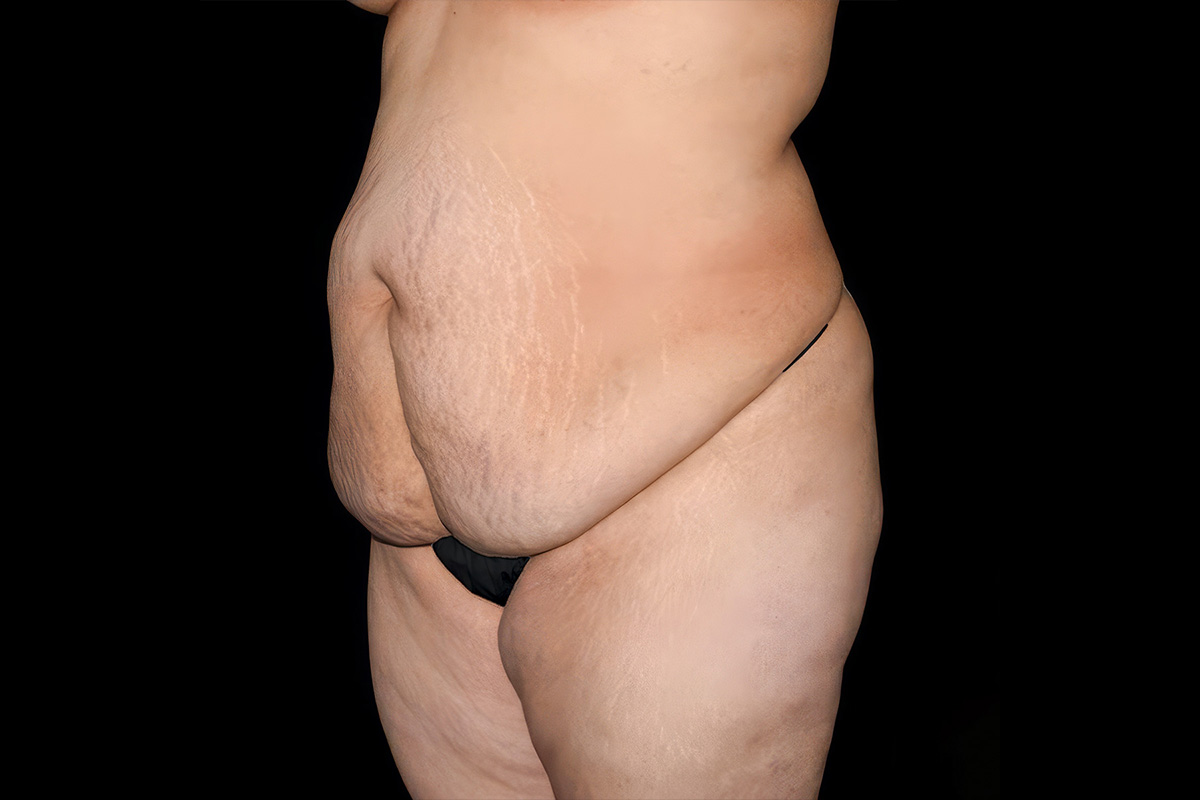
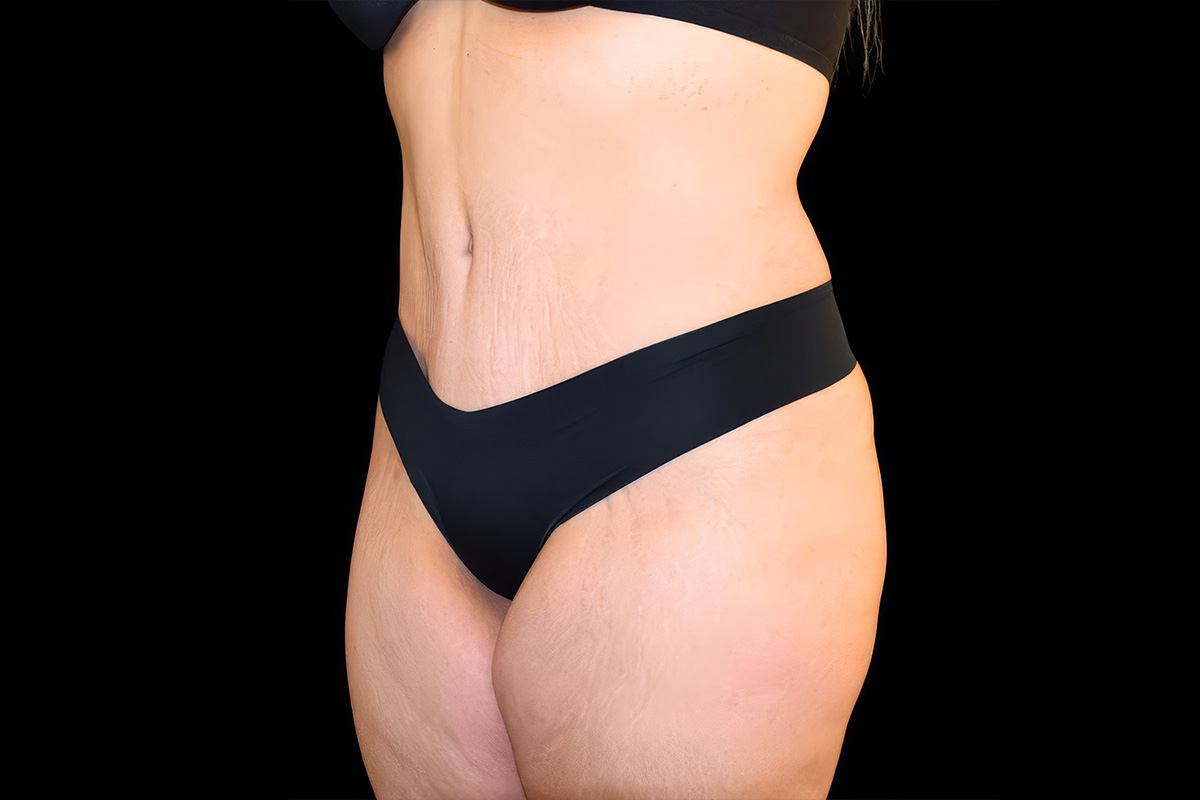


Many patients describe the same experience: months or years of core work, a healthy weight, an active lifestyle, and yet a midsection that still looks and feels wrong. The lower abdomen stays soft and rounded in a way that crunches never seem to touch. Carrying groceries or lifting children creates a sensation of weakness or instability through the core. Lower back pain lingers without an obvious explanation. For a significant number of postpartum women, the underlying cause is diastasis recti, a condition that affects an estimated 30 to 60 percent of women during or after pregnancy and that exercise alone cannot always resolve.
This guide explains what diastasis recti is, how to check yourself at home, what physical therapy can and cannot achieve, and when abdominoplasty with muscle repair is the appropriate next step. Dr. Roham’s Newport Beach practice regularly evaluates patients dealing with exactly this situation, many of whom have spent years looking for answers before finding their way to a surgical consultation.
Contents
- 1 What is Diastasis Recti?
- 2 The Diastasis Recti self-test: how to check yourself at home
- 3 When physical therapy and exercise can help
- 4 When surgery is the right answer for Diastasis Recti
- 5 What to expect from Diastasis Recti repair: results and recovery
- 6 Diastasis Recti and hernia: are they the same?
- 7 Questions to ask your surgeon about Diastasis Recti repair
- 8 FAQ
- 8.1 Can Diastasis Recti heal on its own without surgery?
- 8.2 How do I know if I have Diastasis Recti?
- 8.3 Will insurance cover Diastasis Recti repair?
- 8.4 Is Diastasis Recti repair the same as a Tummy Tuck?
- 8.5 Can I get pregnant again after Diastasis Recti surgery?
- 8.6 How long after having a baby can I have Diastasis Recti surgery?
- 8.7 Does Diastasis Recti cause back pain?
- 8.8 What is the difference between a mini Tummy Tuck and a full Tummy Tuck for Diastasis Recti?
- 8.9 Can Diastasis Recti be repaired without surgery?
- 9 Explore Diastasis Recti repair with Dr. Roham in Newport Beach
- 10 Sources
What is Diastasis Recti?
Diastasis recti (often abbreviated DR) is the separation of the two rectus abdominis muscles along the midline of the abdomen. These are the paired muscles that run vertically down the front of the abdominal wall and are held together at the center by a band of connective tissue called the linea alba. During pregnancy, the growing uterus expands outward, stretching the abdominal wall and placing sustained tension on the linea alba. In some women, that connective tissue stretches and does not fully recoil after delivery, leaving a gap between the muscles that compromises the structural integrity of the core.
Why it happens
Several factors increase the likelihood of developing diastasis recti: multiple pregnancies, carrying multiples or a large baby, rapid weight gain during pregnancy, and genetic differences in connective tissue strength and elasticity. Age is also a factor, as collagen quality naturally declines over time. It is worth stating clearly that diastasis recti is not a failure of effort or fitness. It is a structural consequence of the physiology of pregnancy, and it occurs in active, health-conscious women just as readily as in anyone else.
How common is Diastasis Recti?
Research estimates that diastasis recti occurs in 30 to 60 percent of pregnant women, with the highest prevalence in the third trimester and immediate postpartum period. Many cases partially resolve in the first six to twelve months postpartum as the abdominal wall recovers. However, diastasis recti that persists beyond twelve months is considerably less likely to resolve on its own. Patients in this group are the ones most likely to benefit from formal evaluation and, in some cases, surgical repair.
What Diastasis Recti feels like and looks like
The most recognizable visual sign is a cone or dome shape along the midline of the abdomen when performing a crunch or sit-up. At rest, the abdomen may look soft and rounded in the lower portion even when the patient is at a healthy weight. Running a finger down the midline, patients often feel a soft, yielding valley between two muscle ridges. Functional symptoms include persistent lower back pain (the separated muscles cannot effectively stabilize the spine), difficulty with heavy lifting, and a general sense of core weakness that does not improve with exercise. Some patients also experience mild to moderate urinary stress incontinence, which is often related to pelvic floor dysfunction that accompanies diastasis recti.
The Diastasis Recti self-test: how to check yourself at home
The self-test is a straightforward screening tool that can give you a meaningful indication of whether diastasis recti is present and how significant it may be. It is not a diagnosis, but it is a useful starting point before seeking a formal evaluation from a pelvic floor physical therapist or physician.
How to perform the diastasis recti self-test:
- Lie flat on your back with knees bent and feet flat on the floor.
- Place your fingertips horizontally across your midline at the level of your navel.
- Slowly lift your head and shoulders off the floor in a mini crunch. Do not perform a full sit-up.
- Feel for a gap or soft valley between the muscle ridges on either side of your fingers.
- Count the number of finger widths that fit in the gap.
Interpreting the result:
- 1 finger width: within the normal range.
- 2 finger widths: mild diastasis recti. Often responds well to physical therapy.
- 3 or more finger widths: moderate to significant diastasis recti. Conservative treatment may not fully resolve this degree of separation.
Also pay attention to depth: a gap that feels very soft and gives way easily indicates significant linea alba laxity even if the width seems modest. Both dimensions matter. A pelvic floor physical therapist or physician can formally assess diastasis recti with ultrasound measurement, which is more precise than the finger-width test.
When physical therapy and exercise can help
Physical therapy is the appropriate first-line treatment for the majority of patients with diastasis recti. Surgery is not the starting point. For many patients, a well-structured course of physical therapy produces meaningful improvement.
What a pelvic floor physical therapist does for Diastasis Recti
Pelvic floor physical therapy focuses on re-activating the deep core muscles that support the linea alba: primarily the transverse abdominis and the pelvic floor muscles, both of which work in coordination with the rectus abdominis. Therapy typically includes breath coordination training, progressive core loading, and the use of abdominal splinting techniques during exercise to reduce strain on the separation. A meaningful course of PT generally requires three to six months of consistent work to show measurable results.
Exercises to avoid with Diastasis Recti
Certain exercises increase intra-abdominal pressure in ways that stress the linea alba and can worsen rather than help the separation. Traditional crunches and sit-ups, double-leg lifts, heavy deadlifts without proper core coordination, planks in the early stages, and certain yoga poses involving deep backbends are commonly listed among exercises to avoid or modify. This is not a permanent restriction. As diastasis recti improves under PT guidance, many of these movements can be safely reintroduced in a progressive, supervised way.
When conservative treatment is working and when it is not
Indicators that PT is making a difference include a measurably narrowing gap, improved core strength and stability, and reduction in back pain. Indicators that conservative treatment has reached its limit include no measurable gap reduction after six or more months of consistent physical therapy, persistent functional symptoms, and a gap of three or more finger widths that is not changing. At this point, a surgical consultation is appropriate and warranted.
When surgery is the right answer for Diastasis Recti
For some patients, the connective tissue of the linea alba has stretched and thinned to a degree that no amount of muscle strengthening will bring the two halves of the rectus abdominis back together. Physical therapy can strengthen the muscles around the gap, but it cannot close a gap that is structurally too wide or too lax. In these cases, surgery is not a shortcut. It is the only reliable repair.
Who is a candidate for surgical diastasis repair?
Strong candidates for surgical repair typically present with a gap of three or more centimeters that has not responded to six or more months of consistent physical therapy, functional symptoms including back pain or core instability that affect quality of life, completed childbearing (another pregnancy can re-separate a surgical repair), stable weight at or near their goal, and non-smoking status. Some patients with smaller gaps but significant functional symptoms also meet the criteria for surgical evaluation. Individual assessment by a surgeon is needed to determine candidacy rather than applying a rigid numerical threshold.
What surgical diastasis repair actually means
Surgical repair of diastasis recti is performed as part of a tummy tuck (abdominoplasty). During the procedure, the surgeon accesses the abdominal wall and uses sutures to bring the separated rectus muscles together along the midline, a technique called plication. This restores the structural integrity of the abdominal wall and addresses the outward bulge caused by the separation. Excess skin and stretch marks in the lower abdomen are then removed as the outer component of the tummy tuck. The two components of the procedure, muscle repair and skin removal, address two distinct but related problems in a single operation.
Patients considering this path should also review our mommy makeover and what is a mommy makeover guides, as diastasis recti repair is often one component of a broader postpartum body contouring plan.
Can Diastasis Recti be repaired without a Tummy Tuck?
Muscle plication can technically be performed laparoscopically without skin removal, but this approach is less common for elective cosmetic cases. Most patients seeking diastasis recti repair after pregnancy also have excess skin and stretch marks in the lower abdomen that benefit from the skin removal component of a full tummy tuck. For patients with more limited skin excess, a mini tummy tuck may address the lower abdominal skin without the full extent of a complete abdominoplasty. A surgeon assessment determines which approach is appropriate for each patient’s specific anatomy.
What to expect from Diastasis Recti repair: results and recovery
Results after Diastasis Recti repair
Patients who undergo surgical diastasis repair typically see a flatter abdominal profile as the midline bulge is corrected, a measurably smaller waist, improved core stability, and in many cases a meaningful reduction in chronic lower back pain. Results are best and most lasting in patients who are at or near their goal weight at the time of surgery and who do not have subsequent pregnancies. This is not a weight loss procedure. The improvement is structural and cosmetic, not metabolic.
Recovery overview
The recovery timeline for diastasis recti repair follows the general tummy tuck recovery arc. For detailed week-by-week guidance, see our tummy tuck recovery guide and our mommy makeover recovery timeline. Patients who undergo muscle plication as part of their tummy tuck should expect a longer abdominal tightness phase than patients having skin removal only. Core-loading exercises are typically not cleared until eight to twelve weeks post-surgery. Full core strength is restored progressively over three to six months with guided rehabilitation.
Diastasis Recti and hernia: are they the same?
Diastasis recti and an abdominal hernia are different conditions, though they can coexist. A hernia involves a structural defect, or hole, in the abdominal wall through which internal tissue can protrude. Diastasis recti is a widening and weakening of the linea alba without a true defect. The two feel different on examination and require different levels of urgency in treatment.
A diastasis recti can make the midline more susceptible to hernia development over time. If a hernia is identified during a surgical evaluation, it may be repaired at the same time as the tummy tuck, often in coordination with a general surgeon. Dr. Roham’s background in general surgery is directly relevant here: his training included abdominal wall anatomy and surgical repair at a level that informs how he evaluates and addresses these cases.
Questions to ask your surgeon about Diastasis Recti repair
Going into a surgical consultation prepared makes the conversation more productive. Consider asking: how significant is my diastasis recti based on examination, and am I a candidate for repair? Am I a candidate for a mini tummy tuck or do I need a full abdominoplasty? Is there any concern about a concurrent hernia? How does the muscle repair component affect my recovery? And, as always: what are your board certification and training credentials, and how can I verify that independently?
FAQ
Can Diastasis Recti heal on its own without surgery?
Mild diastasis recti, particularly in patients within the first twelve months postpartum, can partially or fully resolve with consistent pelvic floor physical therapy. Diastasis recti that persists beyond twelve months and does not respond to six or more months of PT is unlikely to resolve without surgical intervention.
How do I know if I have Diastasis Recti?
The home self-test described above provides a useful indication. A gap of two or more finger widths along the midline when performing a mini crunch suggests diastasis recti is present. A pelvic floor physical therapist or physician can confirm the diagnosis with ultrasound measurement.
Will insurance cover Diastasis Recti repair?
In almost all cases, no. Diastasis recti repair performed as part of an abdominoplasty is considered a cosmetic procedure and is not covered by insurance. Hernia repair performed at the same time may qualify for coverage separately. Discuss your specific situation with your insurer and your surgeon.
Is Diastasis Recti repair the same as a Tummy Tuck?
Not exactly. A tummy tuck refers to the overall procedure, which typically includes skin removal and muscle plication. Diastasis recti repair refers specifically to the muscle plication component. Most patients who need diastasis recti repair also benefit from the skin removal component of a tummy tuck, so the two are commonly performed together.
Can I get pregnant again after Diastasis Recti surgery?
Pregnancy after diastasis recti repair is possible, but a subsequent pregnancy can stretch and re-separate the repaired linea alba. For this reason, surgeons strongly recommend completing childbearing before undergoing surgical repair. This is a clinical recommendation to protect the longevity of your result, not a judgment about family planning.
How long after having a baby can I have Diastasis Recti surgery?
Most surgeons recommend waiting at least six to twelve months postpartum, until breastfeeding has concluded and weight has stabilized. Waiting gives the body time to recover from childbirth and ensures that any natural improvement in the separation has already occurred before surgical intervention is considered.
Does Diastasis Recti cause back pain?
Yes, frequently. The rectus abdominis muscles play a key role in stabilizing the lumbar spine. When the linea alba is weakened and the muscles are separated, this stabilization function is compromised, and chronic lower back pain is a common result. Many patients report meaningful reduction in back pain after surgical repair.
What is the difference between a mini Tummy Tuck and a full Tummy Tuck for Diastasis Recti?
A full tummy tuck addresses skin excess above and below the navel and includes muscle plication along the full length of the linea alba. A mini tummy tuck is more limited in scope, addressing primarily below-navel skin with a shorter scar. Whether a mini or full tummy tuck is appropriate for diastasis recti repair depends on the extent of the separation and the amount of skin excess. Full diastasis recti is typically best addressed with a full abdominoplasty.
Can Diastasis Recti be repaired without surgery?
Mild to moderate diastasis recti can often be meaningfully improved with a structured course of pelvic floor physical therapy. For significant separations (three or more centimeters) that have not responded to conservative treatment, physical therapy alone is unlikely to close the gap. Surgery is the only reliable repair for those cases.
Explore Diastasis Recti repair with Dr. Roham in Newport Beach
Many patients who arrive at a diastasis recti surgical consultation have spent years trying to fix the problem on their own. Learning that surgery is the appropriate solution often feels less like defeat and more like finally having an answer. Dr. Ali Roham is certified by the American Osteopathic Board of Surgery in Plastic and Reconstructive Surgery and completed a five-year general surgery residency before his plastic surgery fellowship. His general surgery training is directly relevant to diastasis recti repair: abdominal wall anatomy, fascial repair, and layered closure are core competencies of that training, not peripheral skills.
His Newport Beach practice serves patients across Orange County who are looking for an experienced surgeon to evaluate and address diastasis recti as part of a broader postpartum body contouring plan. To schedule a consultation, contact the office online or call (949) 269-6960. To view tummy tuck results, visit the tummy tuck before and after gallery.
Sources
- NIH/PubMed, Diastasis recti prevalence and conservative vs. surgical repair outcomes: pubmed.ncbi.nlm.nih.gov
- American Society of Plastic Surgeons, Tummy tuck procedural information and patient safety resources: plasticsurgery.org
- American College of Obstetricians and Gynecologists, Postpartum abdominal separation and rehabilitation guidance: acog.org
- Aesthetic Surgery Journal, Abdominoplasty with rectus plication outcomes and patient satisfaction: aestheticsurgeryjournal.com
- Mayo Clinic, Diastasis recti patient education and exercise guidance: mayoclinic.org