
Gynecomastia Surgery in Newport Beach
Conveniently located to serve Newport Beach and the surrounding areas of Orange County, Huntington Beach, Costa Mesa, and Irvine






Gynecomastia Overview
A rounded or fuller chest contour is one of the more common reasons men avoid going shirtless, and often the one they're least likely to bring up on their own. Diet and exercise can tighten the muscle underneath, but they can't shrink enlarged glandular tissue, which is why the condition tends to persist no matter how disciplined someone is at the gym.
Gynecomastia, sometimes called male breast reduction, addresses this directly by removing excess glandular tissue, fat, or both, depending on what's actually causing the enlargement. The result is a flatter, firmer, more masculine chest contour.

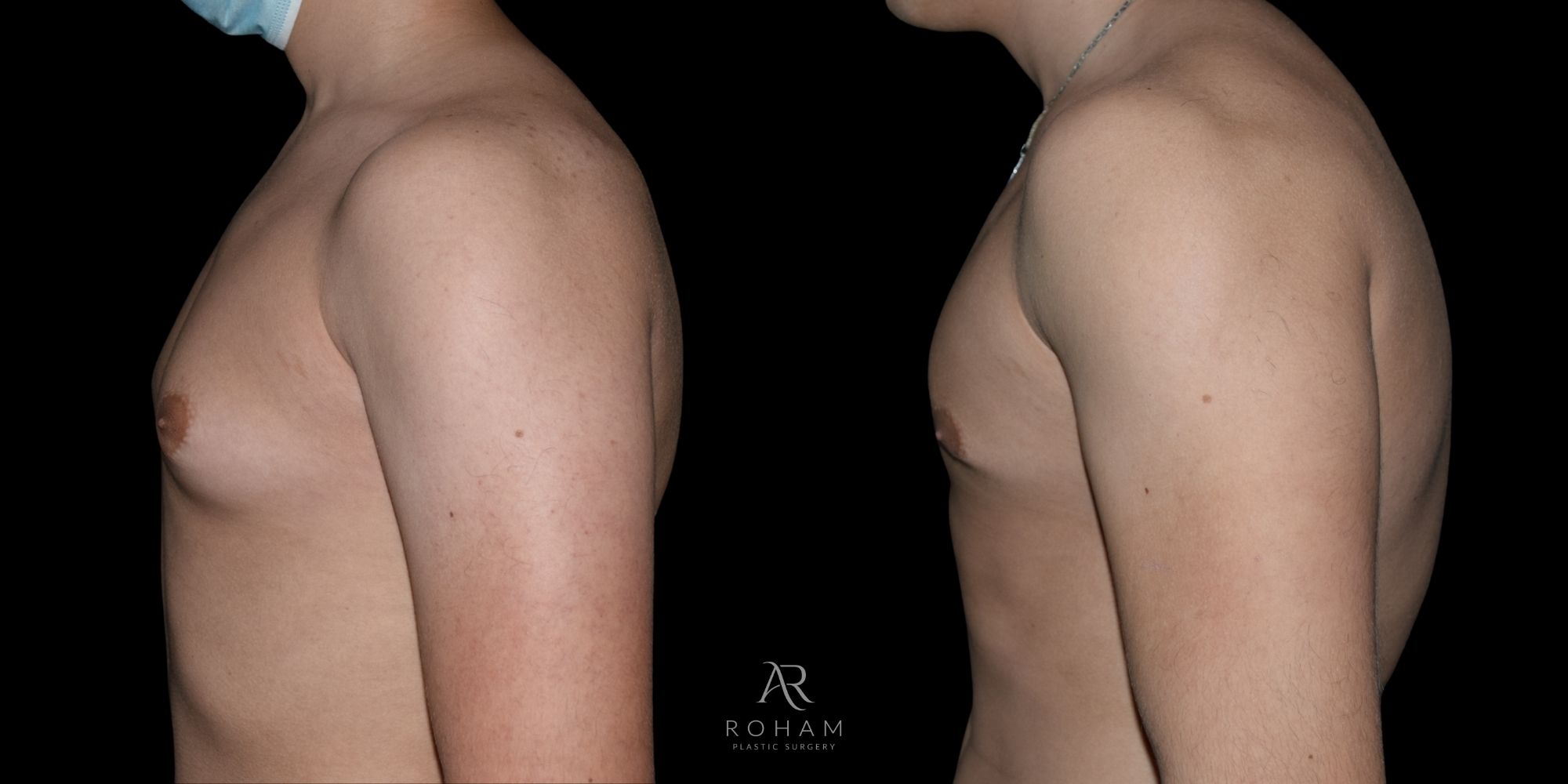
Gynecomastia Before and After Photos
Dr. Roham's gynecomastia results, viewable in his before-and-after gallery, show a consistent focus on natural contouring and minimal scarring across a range of ages and starting points, from younger patients in their late teens to men in their thirties and beyond.
View Gynecomastia Gallery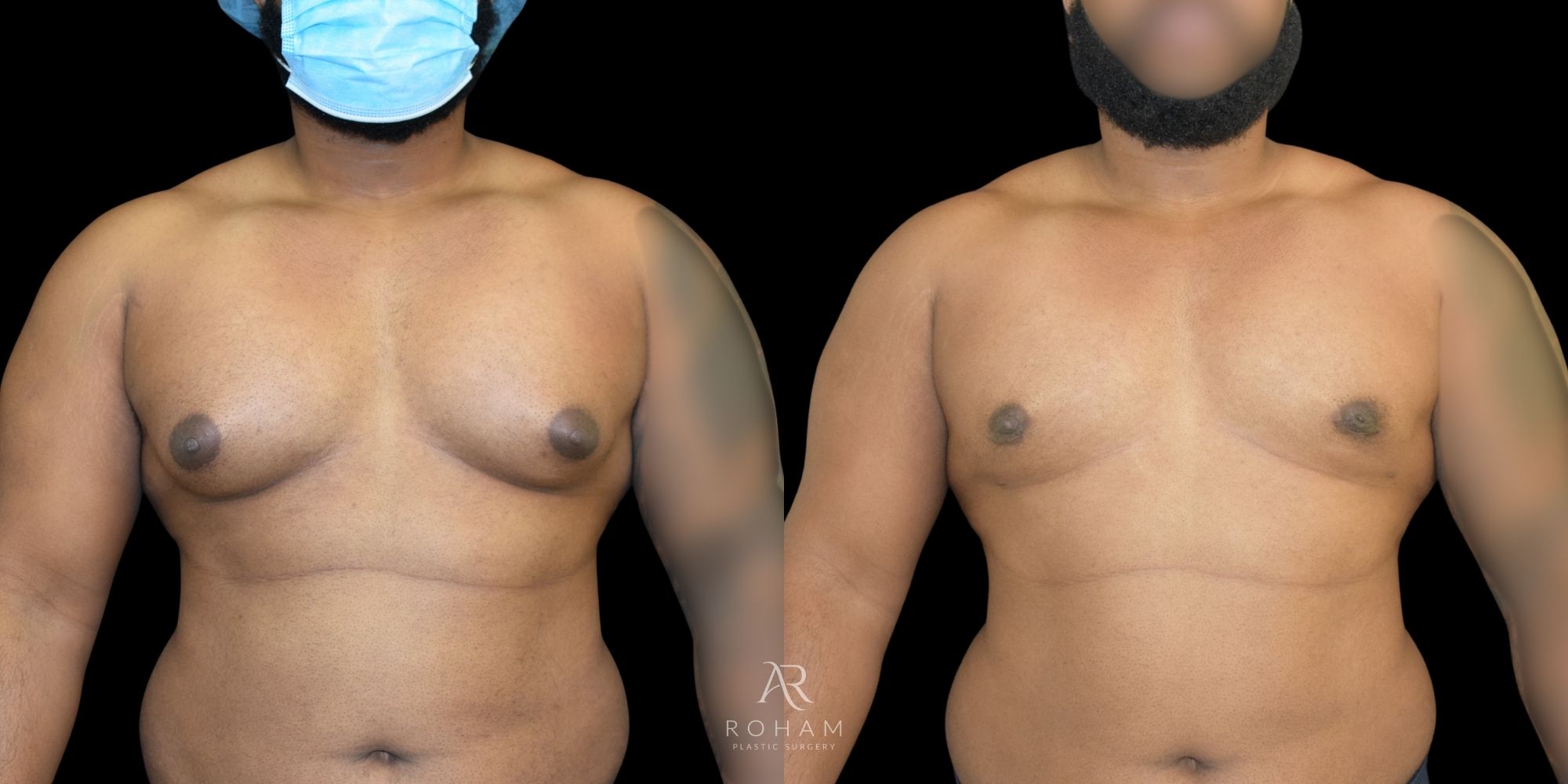

Why Choose Dr. Roham for Your Gynecomastia Surgery?
Gynecomastia correction isn't one procedure. It's a judgment call between liposuction, excision, or both, and that call depends on correctly reading how much of the enlargement is fat versus glandular tissue. Dr. Roham's five years of general surgery residency at Henry Ford Health System, followed by a three-year plastic surgery fellowship at Beaumont Health System, gave him extensive hands-on experience across tissue types before he ever specialized in aesthetic procedures.
That foundation matters here specifically, since misjudging the tissue composition is one of the more common reasons patients seek revision surgery elsewhere.
Learn more about Dr. Roham
Our Patients Are Saying...
Daniela L.

My experience with Dr. Ali Roham has always been a positive one. I appreciate going to this office for the simple fact that they do not try to push treatments or procedures to help me look better. This has happened to me in the past at another establishment, and I was completely turned off and will never go back.

Athena
In a world where it can sometimes feel like healthcare is rushed, Dr. Ali Roham stands out as a beacon of compassion, honesty and professionalism. I wholeheartedly recommend him to anyone seeking a dedicated physician who truly cares about their well-being.
Sogi A.
I have been a patient of Dr. Roham for many years and this review is well overdue.
It's very rare to come across a plastic surgeon who is so humble, down to earth and is always smiling. He listens and provides options but mostly he makes you feel comfortable and relaxed.
Jenna S.
Dr. Ali is amazing! I had breast augmentation 3 months ago and the pain was minimal to none. The results look and feel super natural. Minimal visible scarring. Dr. Ali's team has been super attentive to all of my concerns and questions, which made me feel at ease with the whole recovery process. Dr. Ali is the only surgeon I trust!
Darlene M.
Dr. Roham was recommended by a friend of mine who did her procedure with him. I truly must say his office is the best! I came in with my vision and he truly achieved it! His bedside manners are amazing! I had my liposuction 360, augmentation, and tummy tuck... What I loved most is Dr. Ali keeps your expectations realistic.



What is Gynecomastia?
Gynecomastia is the enlargement of glandular breast tissue in men, and it's more common than most people realize. Hormonal changes during puberty, genetics, certain medications, and normal aging can all contribute, and in many cases there's no single identifiable cause at all.
It's worth distinguishing true gynecomastia, which involves glandular tissue growth, from pseudogynecomastia, which is fat accumulation in the chest without glandular involvement. The distinction matters because it determines treatment: pseudogynecomastia often responds to liposuction alone, while true glandular tissue generally requires surgical excision, sometimes alongside liposuction to refine the surrounding contour.
Enlargement on only one side, or breast changes that come with pain, discharge, or a hard lump, should be evaluated by a physician before considering cosmetic surgery, since these can occasionally point to a different underlying condition. The Mayo Clinic recommends a medical evaluation in these situations. Dr. Roham reviews your history carefully during consultation to rule out anything beyond routine gynecomastia before recommending surgery.

Ideal Candidates for Gynecomastia Surgery
The best outcomes happen in patients who meet a specific set of physical criteria:
At or near a stable, healthy weight, since ongoing weight fluctuation can affect results
Enlargement that has persisted despite diet and exercise, particularly when glandular tissue is involved
Generally healthy, with no untreated medical conditions affecting healing
Realistic expectations about scarring and the degree of correction achievable
Physically and emotionally mature, which for younger patients often means waiting until the late teens, since adolescent gynecomastia can sometimes resolve on its own
Find out if you're a candidate for gynecomastia surgery. Call (949) 269-7990 to book your consultation with Dr. Ali Roham in Newport Beach.



Benefits of Gynecomastia Surgery
A flatter, firmer chest contour that better matches your overall build
Long-term correction, since surgically removed glandular tissue does not typically return
Small, strategically placed incisions that fade significantly over time
Renewed comfort going without a shirt, whether at the beach or the gym
Can be combined with liposuction elsewhere on the body when appropriate
Improved fit in fitted clothing that previously highlighted chest fullness
For many patients, the psychological benefit runs just as deep as the physical change, particularly for men who have avoided certain activities or clothing for years because of self-consciousness about their chest.
Schedule your consultationTypes of Gynecomastia Surgery Techniques

Recovery after Gynecomastia Surgery
First Week:
Compression garment worn continuously to control swelling and support healing
Mild to moderate swelling and bruising, typically most noticeable in the first few days
Light walking encouraged; driving can usually resume once you're off prescription pain medication
No heavy lifting or chest-focused activity
Weeks 2-4:
Gradual return to normal daily activities and desk work
Continued compression garment use as directed
Swelling steadily improves, though final contour is not yet visible
Light cardio may be permitted with Dr. Roham's clearance
Weeks 5-6 and beyond:
Chest exercises such as bench press or push-ups typically cleared around this point
Incision scars continue to fade over the following months
Final chest contour becomes clear as the last of the swelling resolves
Dr. Roham provides detailed post-operative instructions specific to your procedure, with follow-up visits to monitor healing.

Insurance Coverage for Gynecomastia Surgery
Cosmetic gynecomastia surgery is generally not covered by health insurance, since it's considered an elective procedure.
Cost of Gynecomastia Surgery
Gynecomastia pricing depends on whether liposuction, excision, or both are needed, along with the extent of correction required. As general market context only, and not a reflection of Dr. Roham's specific pricing, gynecomastia surgery nationally often falls in the range of several thousand dollars once surgeon, facility, and anesthesia fees are included. Individual results vary, and as with any surgery, there are inherent risks.
To make treatment more accessible, we offer financing options that allow you to break the cost of surgery into manageable monthly payments.
During your consultation, you'll receive a detailed estimate based on your specific anatomy and treatment plan.
Get pricing information
Frequently Asked Questions

Will gynecomastia come back after surgery?
Surgically removed glandular tissue does not typically grow back. Maintaining a stable weight helps preserve your results, since significant weight gain can still add fat to the chest.
How do I know if I have true gynecomastia or just chest fat?
True gynecomastia involves firm glandular tissue, often concentrated beneath the areola, while pseudogynecomastia is fat alone. Dr. Roham can typically distinguish between the two during a physical exam.
Is gynecomastia surgery painful?
Most patients describe the discomfort as manageable with prescribed medication for the first few days, tapering off within about a week. Soreness is more noticeable with combined excision than with liposuction alone.
Will I have visible scars?
Incisions are small and typically placed along the edge of the areola or hidden within natural chest contours. Most scars fade substantially within a year.
Can teenagers get gynecomastia surgery?
Yes, but it's often recommended to wait until later in the teenage years, since gynecomastia that develops during puberty sometimes resolves on its own as hormones stabilize.
What causes gynecomastia?
Hormonal shifts, genetics, certain medications, and normal aging can all contribute, and in many patients no single cause is ever identified.
Can gynecomastia surgery be combined with other procedures?
Yes, some patients combine it with liposuction to other areas of the body during the same surgery, which Dr. Roham can discuss based on your goals and safe surgical time limits.
When will I see my final results?
Initial improvement is visible once swelling subsides over the first few weeks, with final contour typically apparent within a few months as healing completes.